EU Funded Consortiums
HORIZON EUROPE

Climate Monitoring and Decision Support Framework for Sand Fly-borne Diseases Detection and Mitigation with COst-benefit and Climate-policy MeasureS, aims to assist mitigation of climate – and climate change-induced emergence, transmission and spread of vector-borne and zoonotic pathogens based on Eco-health and One Health approaches.
Translating Science into Policy: A Multisectoral Approach to Adaptation and Mitigation of Adverse Effects of Vector-Borne Diseases, Environmental Pollution and Climate Change on Planetary Health.
Through collaboration with experts across disciplines, the project aims to support policy making processes and raise citizens awareness on sustainable planetary health, climate & environmental policies and adaptation & mitigation strategies to natural hazards.

INOVEC is committed to protecting people from the growing threat of arboviral diseases, such as dengue, by enhancing the scientific and technical knowledge on the surveillance and control of Aedes mosquitoes and other urban vectors. Our goal is to strengthen the preparedness of countries to mitigate Aedes-borne diseases and contribute to achieving the SDGs for Neglected Tropical Diseases.
EU4HEALTH

The Joint Action on HEalth woRkfOrce to meet health challEngeS emcompasses 19 European countries and 51 partner organisations working together to improve the health workforce planning capacities so to ensure accessibility, sustainability, and resilience of healthcare services.
Project dedicated to support the implementation of tailored, evidence-based interventions to reduce vaccine hesitancy. It addresses what type of interventions are available, which are effective, how to translate those to new contexts, and to explain the unsuccessful ones to create opportunities for learning and redesign.
EDCTP

Consortium dedicated to show that fexinidazole offers an alternative over melarsoprol in stage-2 r-HAT patients and over suramin in stage-1 r-HAT patients and to support case detection capacity and community awareness in Malawi and Uganda.
 ACOZI-KIDS aims to make treatment of children with sleeping sickness much simpler, by focusing on developing and registering acoziborole as a single-dose, oral treatment for children with Stage 1 and Stage 2 sleeping sickness caused by T.b.gambiense.
Calouste Gulbenkian Foundation & “la Caixa” Foundation
RESPIRA-CV
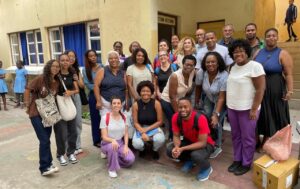
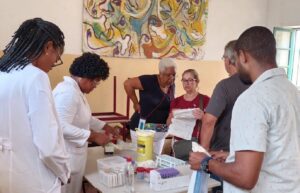
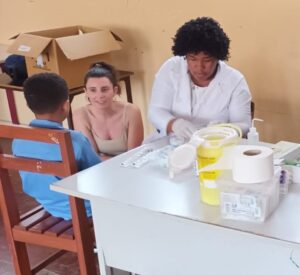
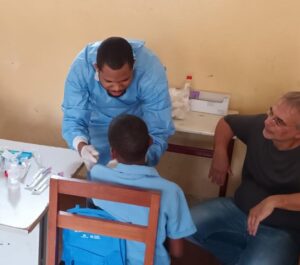

Project led by professors and researchers from Universidade de Cabo Verde, Isabel Inês Araújo and immunoallergologist Maria do Céu Teixeira. RESPIRA-CV focuses on increasing knowledge of asthma and other atopic diseases in children and identifying modifiable risk factors to be tackle through primary preventive interventions.
GHTM members from CTM, PPS and THOP research groups, as well as our BIOTROP and BIOHUB have been involved in the activities.
FCT – Fundação para a Ciência e Tecnologia
CHiLDLIMaR
Health determinants and needs of children on the move in a pandemic context: A longitudinal study for Lisbon and Tagus Valley Region.
Using a collaborative approach at the end of this project we expect to be able to:
- Identify main health needs of the refugee and immigrant children using high quality data collection;
- Understand refugee’s barriers to health care and how the determinants of health might affect immigrant’s children differently;
- Identify more suitable early-childhood interventions to mitigate inequalities over the life course;
- To quantify the magnitude of the impact of the covid-19 economic crisis on potential children´s health inequalities;
- Use this knowledge to improve existing public health strategies for a more inclusive approach, in the perspective of leaving no one behind.
 DogIPM aims to stimulate immune effector cells to tutor the immune system in combating trypanosomatids, preventing infection (prophylactic vaccines) or inducing the most appropriate immune response to cure (therapeutic vaccines). It is expected to make a valid contribution to controlling Leishmania and Trypanosoma infection, reducing the amount, frequency of administration and toxicity of commonly used drugs, decreasing the duration of therapy, improving treatment adherence and achieve clinical and parasitic cure. DogIPM is also expected to participate in student education and communication of science and technology, improving global awareness of the strategic importance of science in the daily lives of citizens.
Recent Highlights
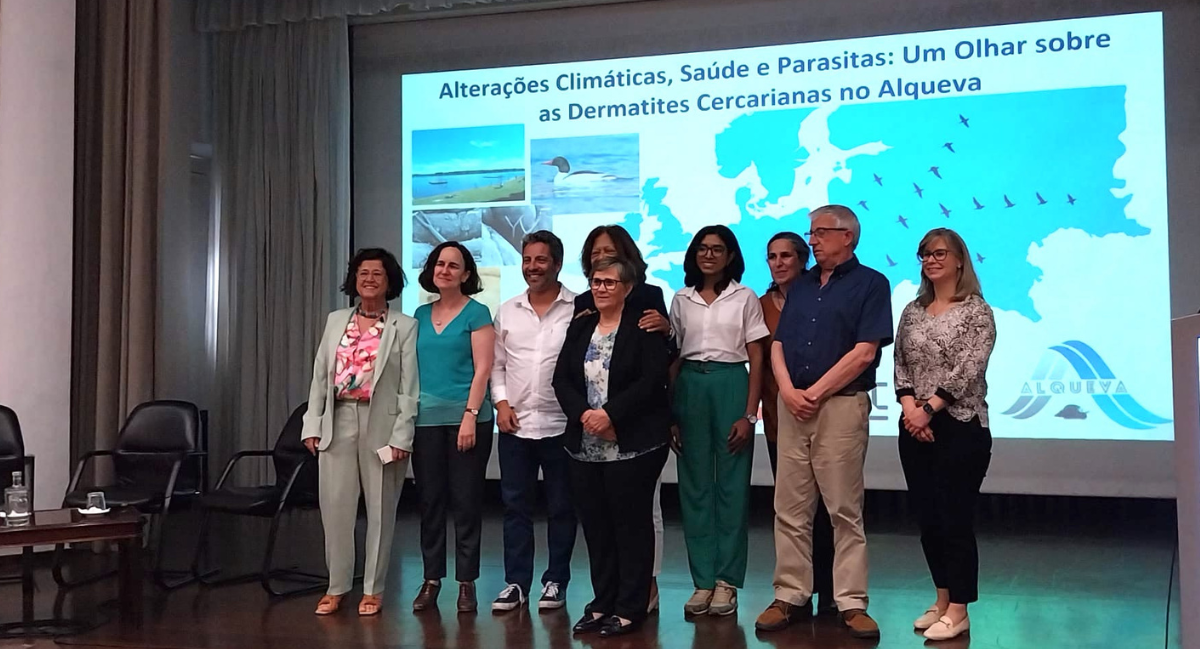
Alqueva Project Sheds Light on Climate Change, Health, and Parasites at Évora Symposium
Interdisciplinary project reveals climate-linked parasitic risks, urging stronger surveillance and One Health collaboration in the Alqueva region.
Read More

RESPIRA-CV: GHTM supports the creation of a biobank at the University of Cabo Verde
During the visit to Uni-CV, GHTM researchers met with local leaders and researchers to plan a biological collection and reinforce scientific collaboration.
Read More

VAX-Action Hosts International Training to Tackle Vaccine Hesitancy Across Europe at IHMT-NOVA
IHMT-NOVA facilitated training to support the evaluation of tailored interventions aimed at reducing vaccine hesitancy among older adults in Europe.
Read More

CLIMOS Project Bridges Science and Policy in Vector Control
CLIMOS presents key findings on sand fly monitoring, pathogen screening, and climate-driven disease modeling. As climate change expands sand fly habitats, the project’s research supports public health preparedness and the development of an Early Warning System.
Read More
More information
Click for more details on all our ongoing and completed projects.